Thickness Guide: When to Use 18mm vs 20mm vs 30mm Stone Slabs
Why Thickness Matters More Than Most Buyers Think
Stone thickness affects four things simultaneously: structural strength (resistance to breakage under load and in installation), weight (and therefore substrate and fixing requirements), material cost (30mm typically costs 40–60% more than 20mm of the same stone), and the physical appearance of edges and overhangs.
10–12mm: Thin Panels and Cladding
Ultra-thin panels (10–12mm) are used in facade cladding systems and wall applications where weight is a critical constraint — particularly high-rise buildings. These require engineered fixing systems (mechanical anchors, structural adhesive) and stone with minimum flexural strength of 10 MPa. Not suitable for flooring or countertops.
Large-format thin panels (up to 3200×1600mm in sintered stone; typically smaller in natural stone) are increasingly popular in contemporary architecture but require extremely careful handling and installation.
18–20mm: The Standard
20mm (sometimes listed as "2cm") is the industry standard for most interior applications and the default specification for:
- Interior flooring (residential and light commercial)
- Wall cladding (interior)
- Bathroom vanity tops (with proper substrate support)
- Standard countertops (when properly supported with full-surface adhesive bedding)
- Stair treads (short spans up to 900mm width)
18mm is sometimes used as a cost-reduction measure but is at the lower edge of safe specification for flooring — most fabricators and installers prefer 20mm as the minimum.
30mm: Where Structural Demands Are Higher
30mm (3cm) is specified when the application demands higher load capacity or longer unsupported spans:
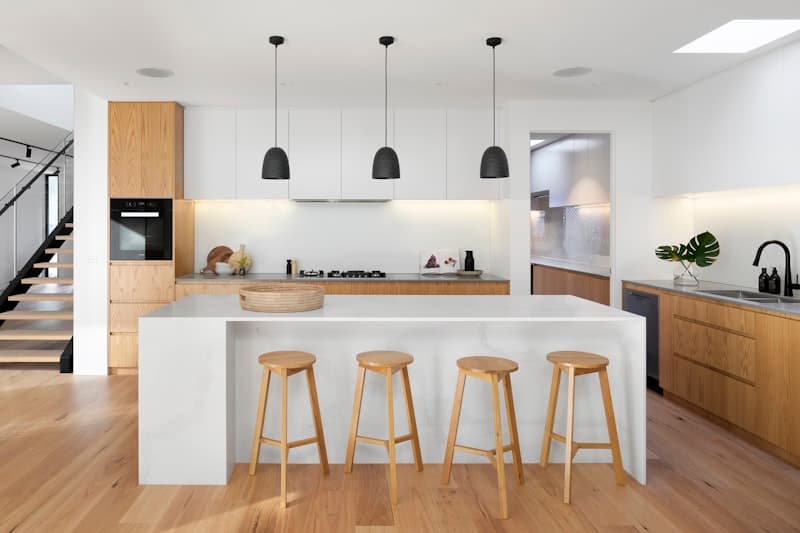
- Kitchen countertops — the standard specification for most kitchen use; overhangs of 200mm+ require 30mm minimum
- Outdoor paving (20mm may be marginal for vehicular or heavy loads)
- Stair treads with spans over 900mm, or in high-traffic commercial settings
- Any countertop with a mitered or bullnose edge detail — the edge needs depth to look substantial
- Commercial bar tops and reception desks with dramatic overhang
40mm and Above: Custom and Structural
Stone 40mm and above is primarily used for structural hearths, window sills in heavy masonry construction, bespoke furniture, and prestige installations where visual mass is desirable. Pricing is significantly higher and production lead times longer, as these pieces are made to order from blocks.
The Weight Calculation
Natural stone weighs approximately 2,500–2,800 kg/m³. A 1m² slab at 20mm weighs ~50–56kg; at 30mm, ~75–84kg. This affects shipping cost (weight is a factor alongside volume), substrate specification (whether the floor structure can carry the dead load), and installation labour (two-person minimum for any slab above ~60kg).
Topics